Understanding Object-Oriented Programming in JavaScript
Computer Engineering student | Full-Stack Developer (in progress) | DSA in C++ | AI-era Tech Explorer 🚀 Building skills, mindset, and systems to create impactful technology.
When you first hear “Object-Oriented Programming”, it sounds big and complicated.
But honestly, the core idea is very simple.
OOP is just a way of organizing code so that it feels closer to how we think in real life.
Let’s understand it step by step.
Start With a Real-Life Example
Imagine a car company.
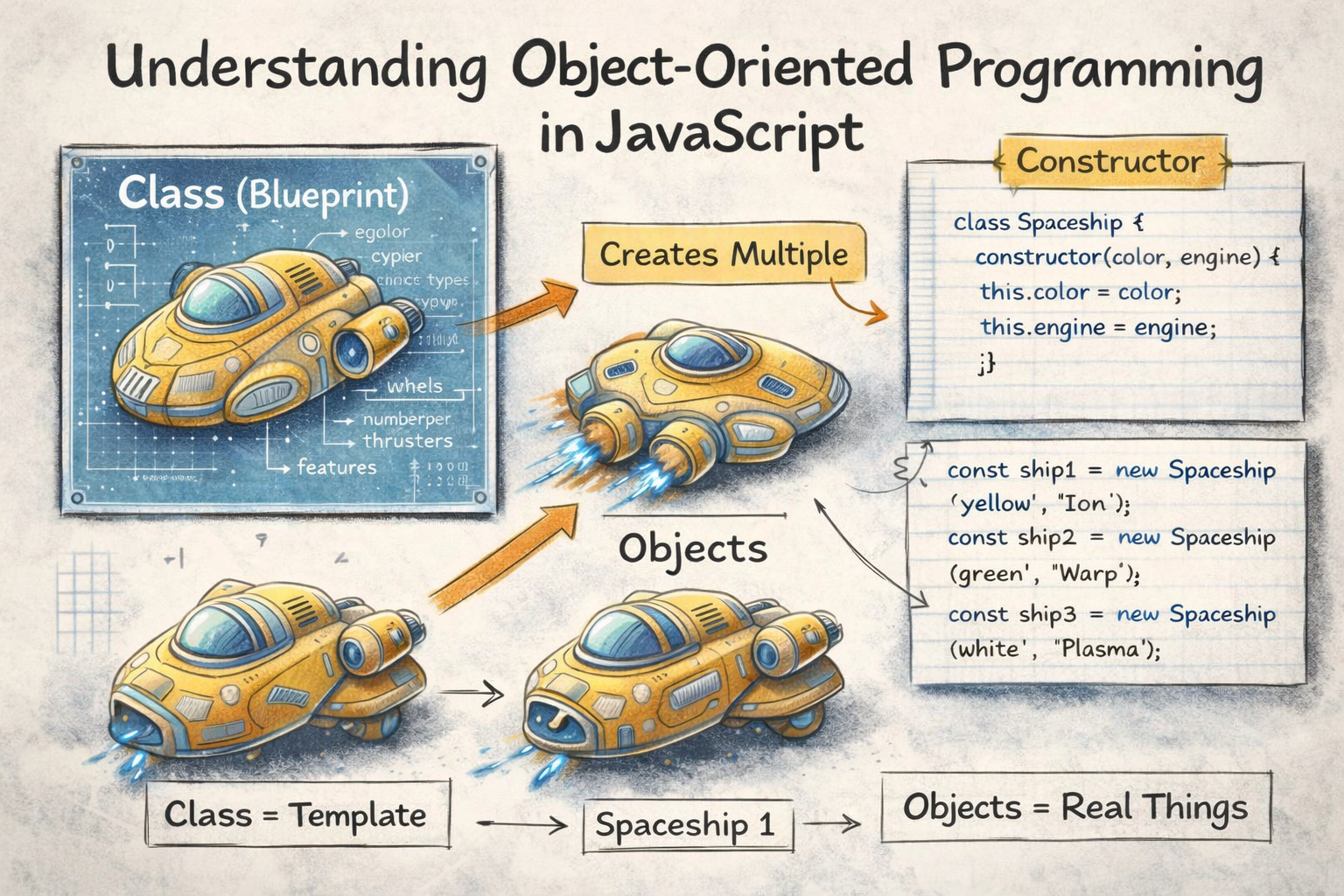
Before making actual cars, they create a blueprint.
That blueprint defines:
color
engine type
number of wheels
features
Using that one blueprint, they can create 1000 cars.
Each car is separate, but all follow the same structure.
In OOP:
Blueprint → Class
Real car → Object
That’s the main idea.
What Does Object-Oriented Programming Mean?
Object-Oriented Programming (OOP) is a style of programming where we structure our code using objects.
Instead of writing random functions and variables everywhere, we group related data and behavior together.
So in simple words:
OOP = organizing code using classes and objects.
What is a Class in JavaScript?
A class is like a template or blueprint.
It defines:
what properties an object will have
what actions (methods) it can perform
A class does not represent a real thing by itself.
It is just a plan.
Creating Objects Using Classes
When you create an object from a class, that process is called instantiation.
Think of it like:
Class → instruction
Object → actual working thing created from that instruction
You can create multiple objects from the same class, and each object will have its own data.
The Constructor Method
Inside a class, there is a special method called constructor.
The constructor runs automatically when you create a new object.
It is mainly used to:
initialize properties
assign values like name, age, etc.
For example, if you are creating a Person class, the constructor can set name and age when the object is created.
Methods Inside a Class
Methods are functions written inside a class.
They define what an object can do.
Example:
If you have a Student class, a method could be:
printDetails
study
getGrade
So properties describe the object.
Methods define its behavior.
Basic Idea of Encapsulation
Encapsulation means keeping related data and methods together inside one structure.
Instead of:
storing name in one place
storing age somewhere else
writing functions separately
You keep everything inside one class.
This makes code:
cleaner
easier to manage
easier to reuse
That’s the practical benefit.
Why OOP is Useful
The biggest advantage of OOP is reusability.
Once you create a class, you can use it again and again.
Instead of rewriting the same structure for every new student, user, or car —
you create a class once and reuse it.
This saves time and keeps your code organized.